
The Scented Echoes of Time: A Journey Through the Ancient Art of Perfumery
Before the grand boulevards of Paris became synonymous with haute parfumerie, the story of fragrance began its whispered journey in the sun-drenched cradles of ancient civilization. From the mystical rituals of Babylon to the sacred offerings of Egypt and the industrious workshops of the Indus Valley, the alchemy of scent has been entwined with human experience, an invisible thread weaving through faith, medicine, and the subtle art of allure.
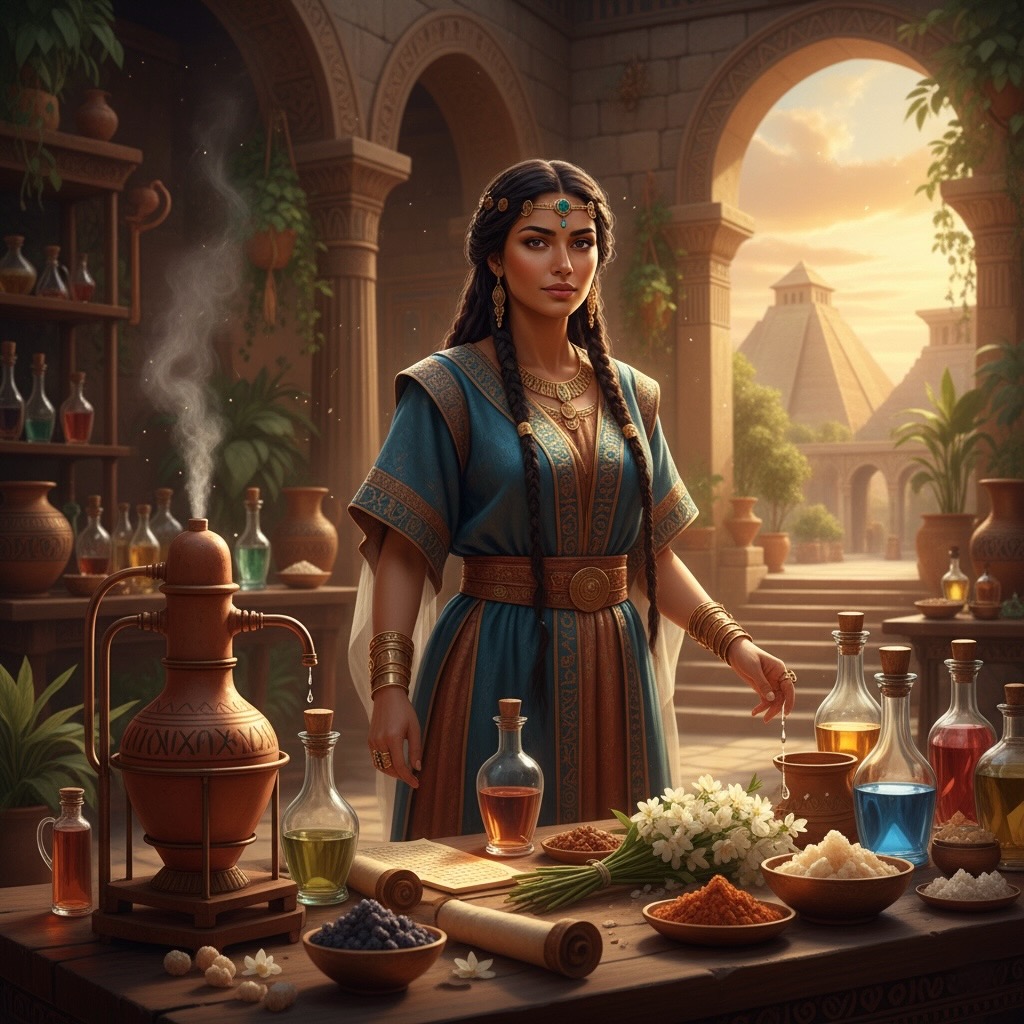
Tapputi: The Dawn of Distillation in Mesopotamia
Imagine a time when the very act of extracting scent was a profound mystery, a delicate dance between nature and innovation. Our earliest glimpse into this world introduces us to Tapputi, the world's first documented perfumer. Around 1200 BCE, amidst the grandeur of a Mesopotamian royal palace, Tapputi, a woman of remarkable skill, meticulously blended flowers, precious oils, and fragrant resins like myrrh and balsam. Cuneiform tablets speak of her artistry, detailing techniques of distillation and filtration that eerily presage modern methods. She was not merely mixing ingredients; she was a pioneer, refining her concoctions with a scientific rigor that belied her era, transforming raw botanicals into aromatic masterpieces.
Egypt: The Divine Breath of Ra
For the ancient Egyptians, perfume was more than a pleasant aroma; it was the very "sweat of the sun god Ra," a bridge between the mortal and divine. From approximately 3000 BCE, fragrance permeated every aspect of their sophisticated society. Priests burned sacred kyphi incense in lavish temple rituals, its fragrant smoke carrying prayers skyward. Perfumes played a vital role in the elaborate embalming process, believed to preserve the soul as well as the body. Lotus oil, frankincense, and the bittersweet notes of myrrh were held in particularly high esteem.
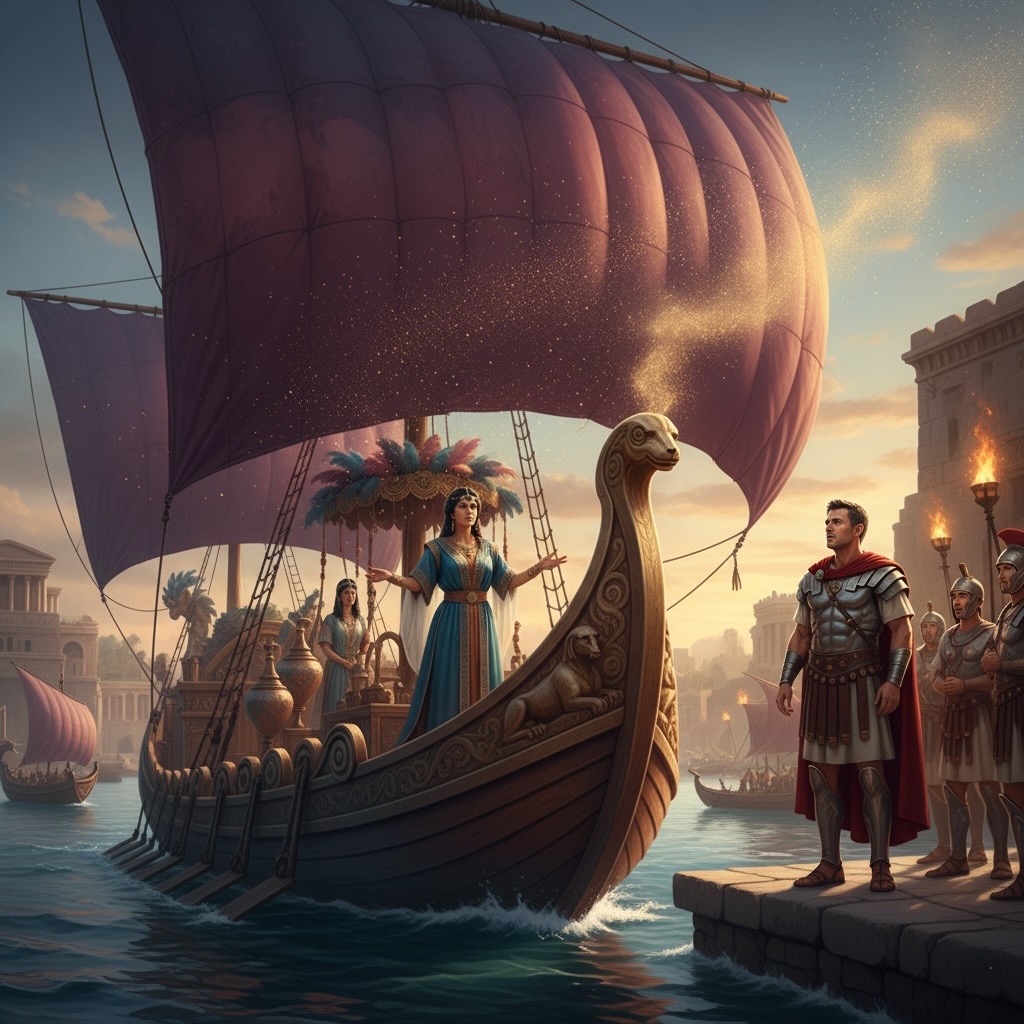
The mystique of Egyptian perfumery is palpable even today. When Tutankhamun's tomb was opened in the 14th century BCE, alabaster vessels, sealed for millennia, still bore the faint, ethereal trace of their original contents, a testament to the enduring power of ancient craft. Cleopatra VII, the legendary queen, understood this power intimately. She famously employed scent as a strategic weapon of seduction and diplomacy, her barge sails perfumed with exquisite oils, announcing her arrival to Mark Antony before she even graced his sight.
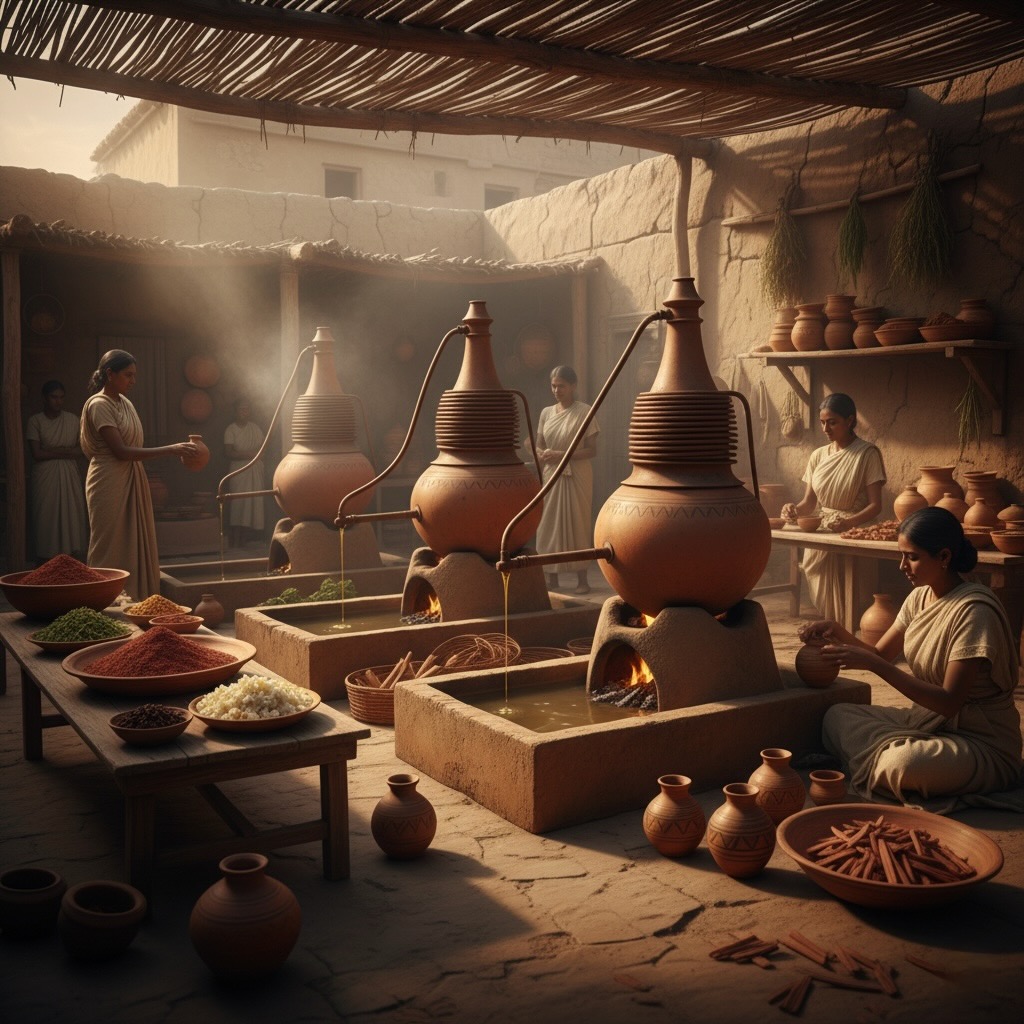
The Indus Valley: Workshops of Aroma
Long before written records could capture their ingenuity, the people of the Indus Valley Civilization (3300 BCE) were already masters of aromatic extraction. Archaeological digs in present-day Pakistan and northwest India have unearthed remarkably sophisticated terracotta distillation stills. These ancient "fragrance factories" were used to coax precious essential oils, likely from local botanicals such as sandalwood, hinting at a developed perfumery tradition that predates even the Babylonian archives.
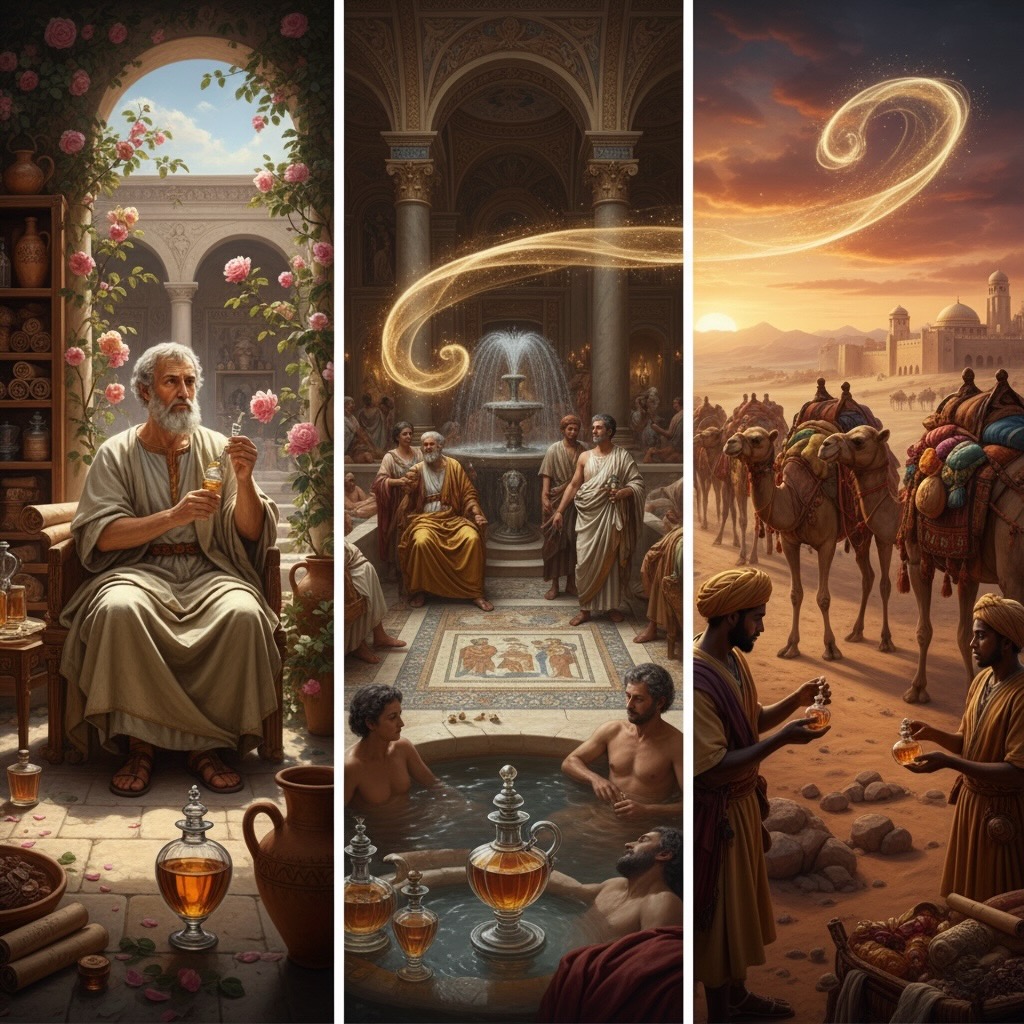
Aromatic Trails: Greece, Rome, and Global Exchange
The aromatic legacy of Egypt and the Near East found new life and refinement in the classical worlds of Greece and Rome. Theophrastus, a brilliant student of Aristotle, dedicated significant portions of his botanical studies around 300 BCE to the intricate world of perfumes. The Romans, known for their love of luxury and ritual, embraced fragrance with fervor, incorporating it into their elaborate bathing ceremonies, perfuming their homes, and using it in grand public events. By the 1st century CE, Pliny the Elder, in his monumental Natural History, meticulously cataloged dozens of perfume recipes, illustrating the pervasive role of scent in Roman life.